Baroque Traces
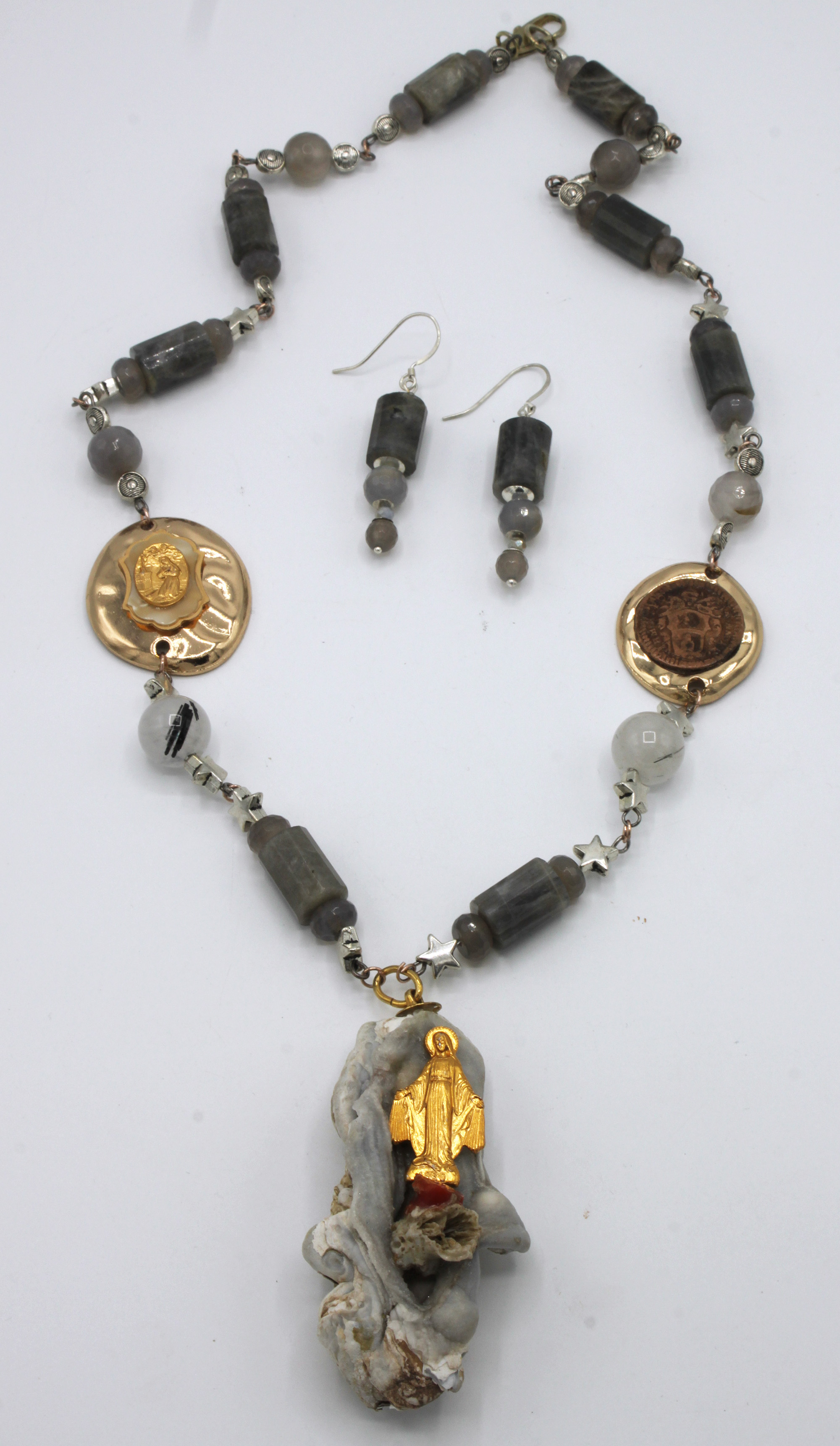
Symbolic Relationship between Coin and Plaques: The Gubbio Quattrino, as part of papal minting under Clement XI, represents stability, continuity, and protection within the Umbrian legations and the daily Baroque economy. Complementing this historical dimension are the two devotional plaques: the Miraculous Madonna, symbolizing grace, intercession, and divine protection, and Saint Rita of Cascia, representing hope, perseverance, and comfort in adversity. Together, coin and plaques create a dialogue between civil order and lived faith, uniting history, devotion, and symbolic value in a single wearable piece.
The Medal
Miraculous Madonna and Saint Rita of Cascia Plaques
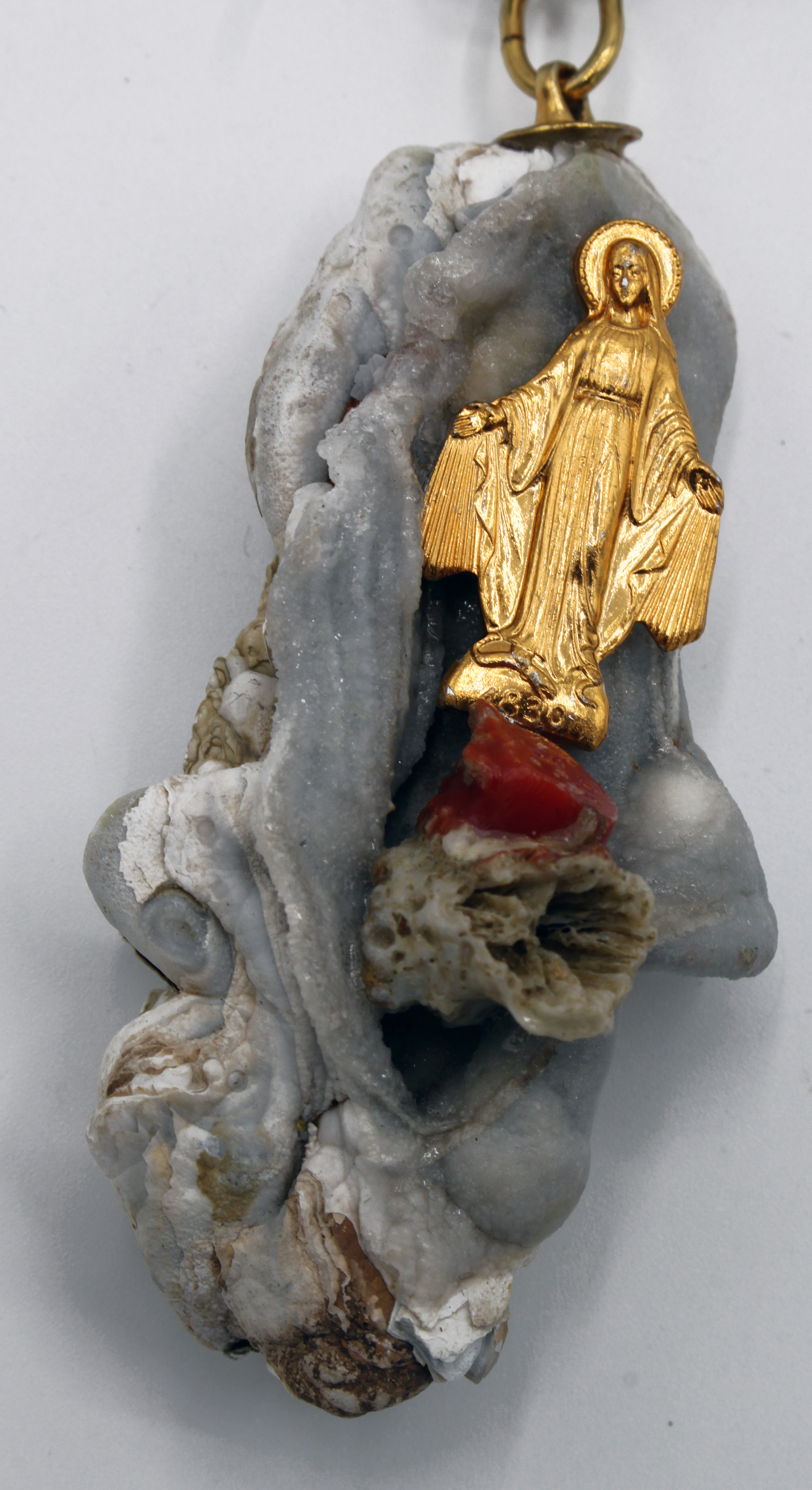
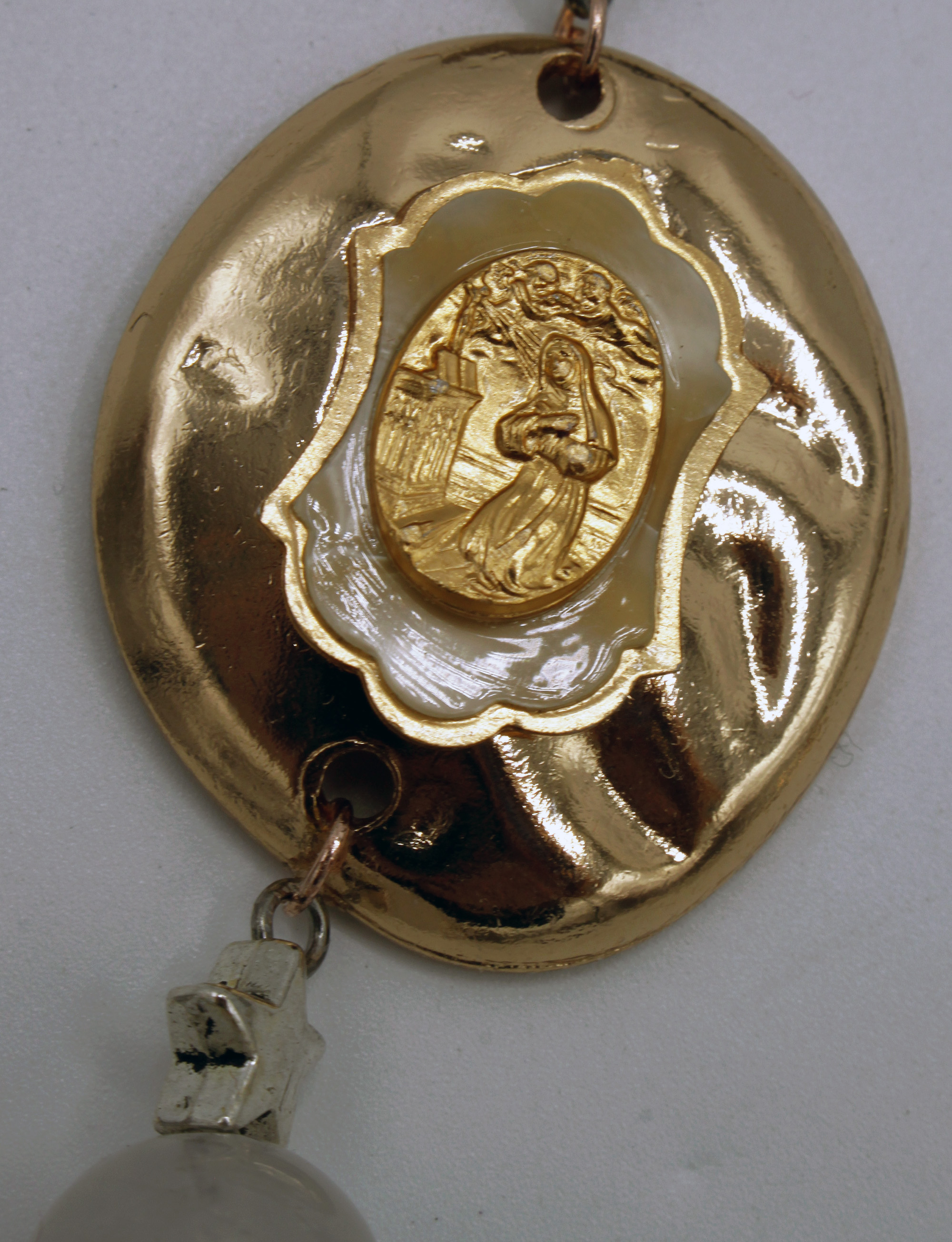
This creation pairs the Quattrino minted in Gubbio under Pope Clement XI (1700–1721) with a Miraculous Madonna plaque and a smaller Saint Rita of Cascia plaque, both produced by Maggi of Milan in gold anodized aluminum between the 1930s and 1950s. The larger plaque depicts the Miraculous Madonna, a symbol of protection and divine intercession, highlighting the brightness, durability, and resilience typical of the finishes of that era.
The Coin
QUATTRINO
Papal States, CLEMENT XI 1700-1721
GUBBIO
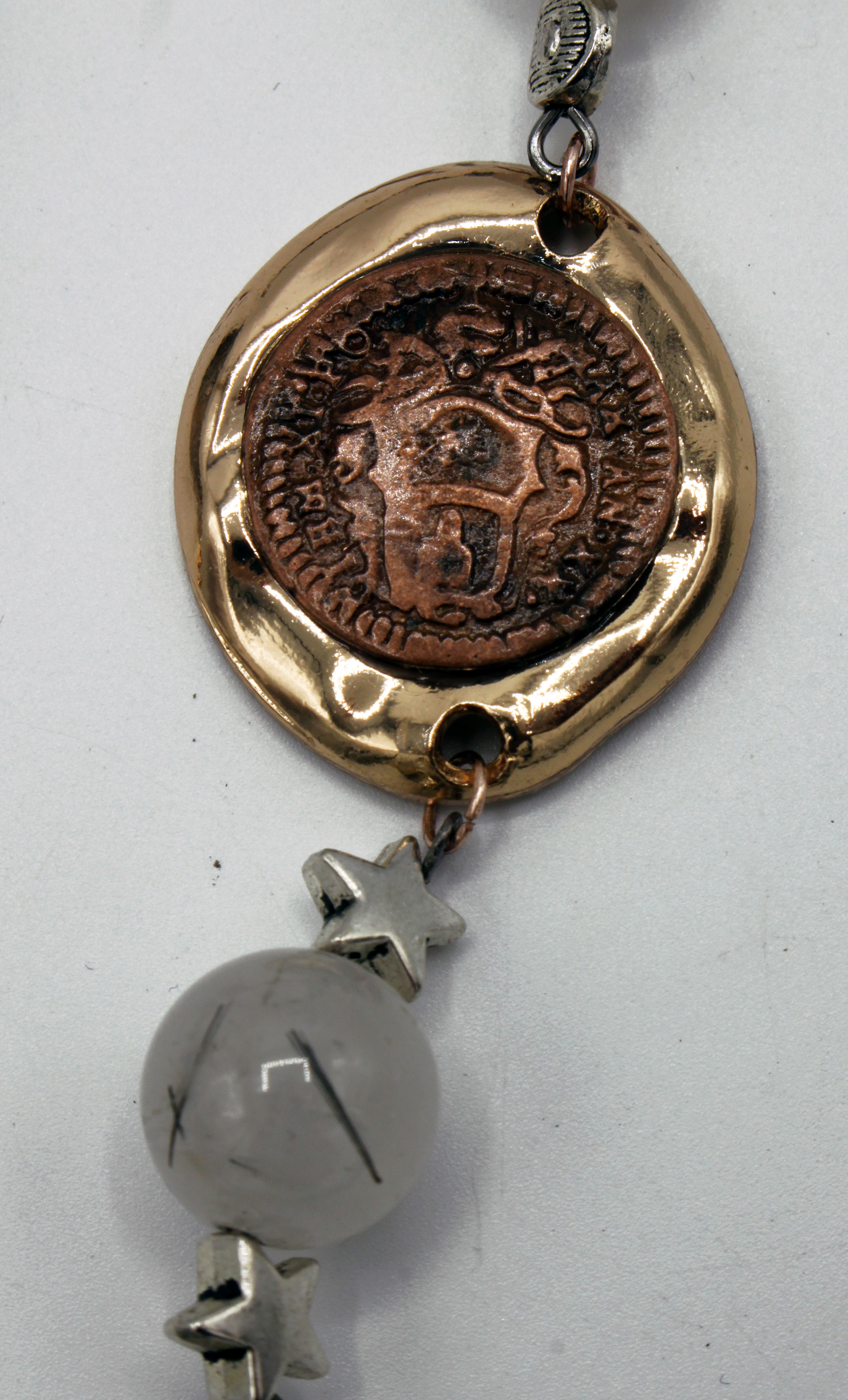
The Quattrino, minted in Gubbio under Pope Clement XI (Gian Francesco Albani), is a 4-denari copper coin issued at the local Eugubine mint. Clement XI, originally from Urbino and elected pope in 1700, reigned during the War of the Spanish Succession, losing territories but promoting concordats and the protection of Roman archaeological heritage. Gubbio, a papal enclave in Umbria since the 16th century, issued autonomous coins for local trade until the 18th century. Obverse: Papal coat of arms of the Albani family (flordelized band on a leopard’s head) with tiara and keys. The coin represents the continuity of papal minting in the legations; the Albani arms symbolize patronage (works in Rome and Urbino). Used for small transactions, it reflects the rural Umbrian economy of the Baroque period.
The Materials