
Secrets of Toledo
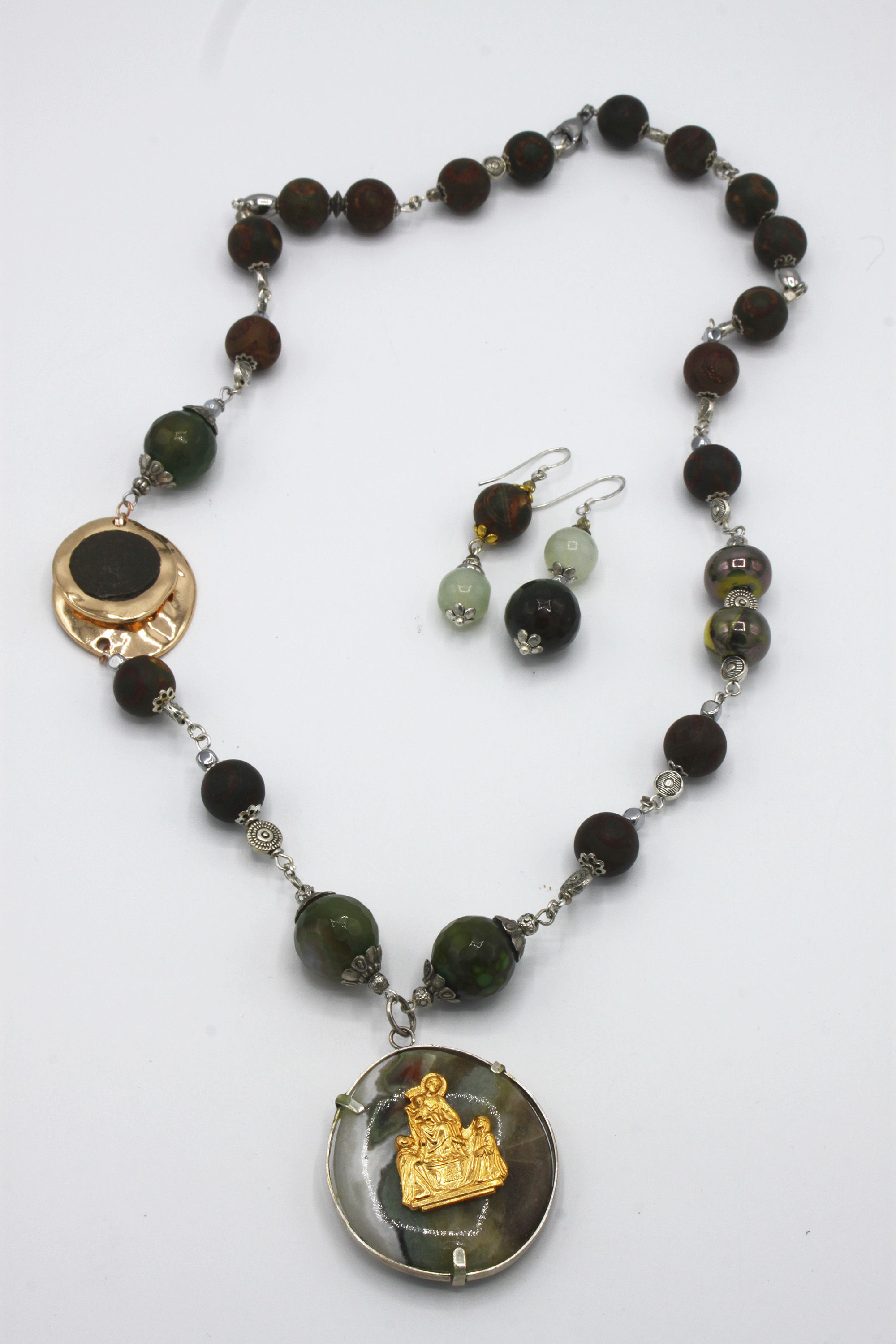
Symbolic Relationship between Coin and Plaque: The Blanca of Toledo symbolized order, stability, and Christianity during a period of political instability, standardizing small change under Enrique IV’s troubled reign. The Madonna of Pompei plaque, with the Virgin and the Rosary saints, represents spiritual protection and guidance of faith. Together, coin and plaque merge history and devotion, transforming a symbol of authority and economic order into a call for divine care and protection, blending historical memory and popular faith into a wearable work of art.
The Medal
Madonna of Pompei Plaque
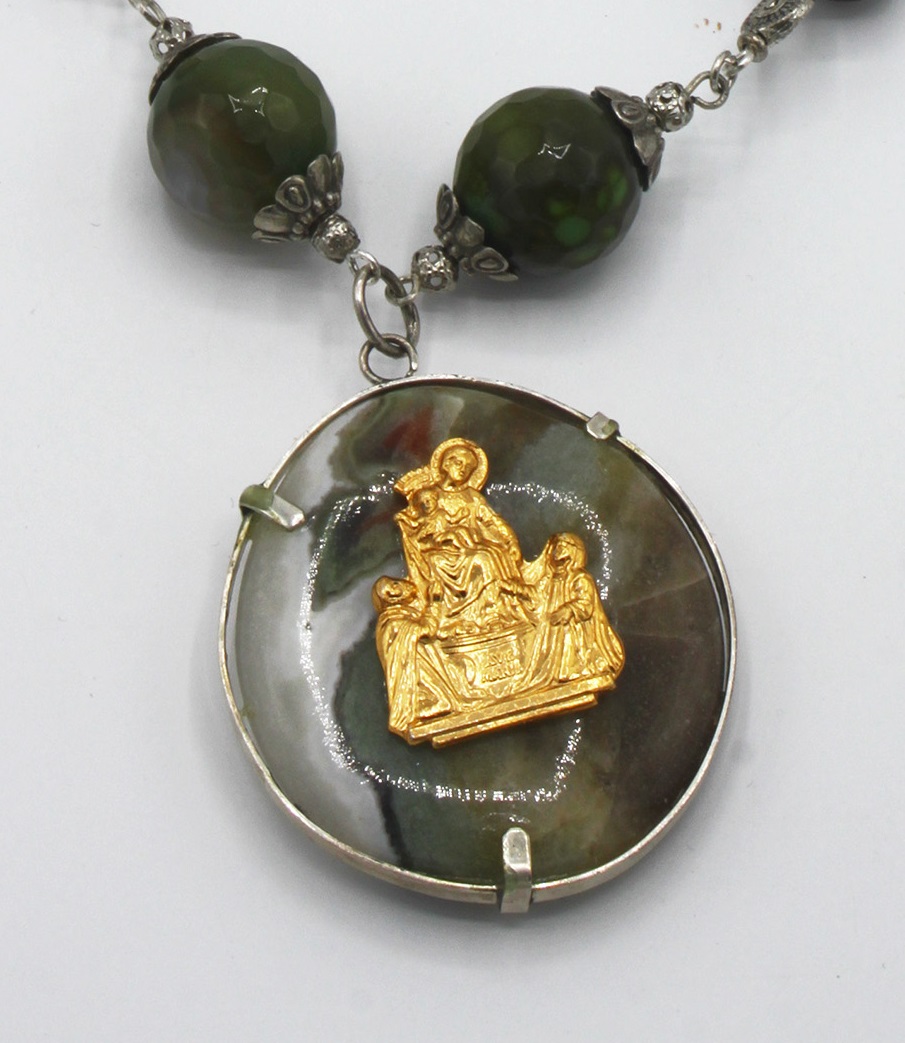
This creation pairs the Blanca of Toledo (1471–1474, Enrique IV of Castile) with a Madonna of Pompei plaque in gold anodized aluminum, produced by Maggi of Milan between the 1930s and 1950s. The plaque depicts the Virgin Mary with the Child Jesus, flanked by Saint Dominic of Guzmán and Saint Catherine of Siena, taking advantage of the anodized aluminum’s properties for a bright, durable, and long-lasting finish.
The Coin
Medieval Coin1471-1474
Spain, Enrique IV de Castilla 1454-74: Blanca, Toledo
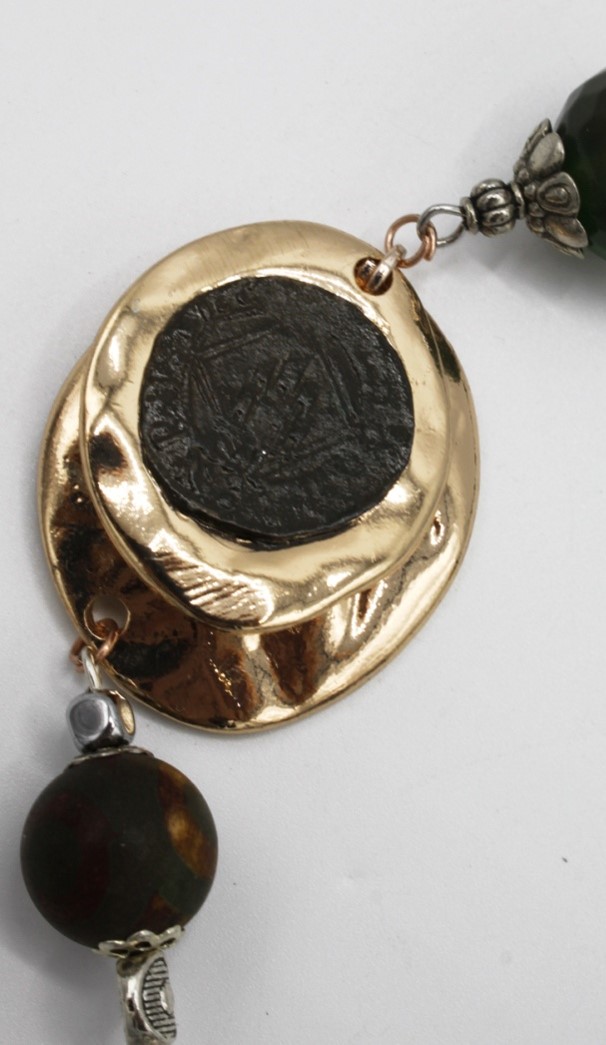
The Blanca, minted in Toledo under Enrique IV of Castile (“el Impotente”), is a small-denomination vellón coin (copper-silver alloy) issued during the monetary reform known as the Ordenamiento de Segovia on April 10, 1471. Known as the “Blanca del Rombo” for the characteristic rhombus framing the main motifs on both sides, the reverse depicts a crowned castle inside a double rhombus, with the inscription “ENRICVS DEI GRACIA REX” and four small dots or circles along the outer edge. Introduced to standardize small change during Enrique IV’s troubled reign, it was minted in only six locations (Toledo, Cuenca, Burgos, etc.) to combat inflation and is often referred to as a calderilla.